





As an executive managing global textile operations, I frequently consult with enterprise procurement directors looking to optimize their corporate accessory programs. Sourcing premium fashion accessories involves navigating complex supply chain variables, chemical compliance standards, and precision manufacturing capabilities. To successfully launch a high-impact corporate gift or retail collection, procurement officers must evaluate suppliers through a structured, multi-dimensional framework.
1. Verification of Raw Material Grades and Substrates
The foundation of any exceptional custom printed scarf lies in the physical integrity of its raw textile base. Whether your specifications require 100% grade-6A mulberry silk twill, lightweight chiffon, or high-density modal blends, verifying yarn uniformity, momme weight, and weave density before entering production is essential. Enterprise buyers must demand raw-material physical test reports to guarantee that the fabric delivers the luxurious hand-feel, structural durability, and graceful drape expected by corporate recipients.
2. Factory Audits and Manufacturing Capacity
Establishing a strategic partnership with a fully certified bulk scarf factory is critical for mitigating operational risks during high-volume delivery cycles. Enterprise clients should evaluate facilities based on their institutional qualifications, such as ISO 9001 quality management and OEKO-TEX Standard 100 environmental safety certifications. Partnering with audited manufacturers ensures predictable lead times, transparent labor standards, and strict batch-to-batch quality controls across every production run.
3. Direct Sourcing and Cost Structure Optimization
Procurement teams must carefully analyze their cost breakdown to eliminate unnecessary intermediary markups. By establishing a direct supply agreement forscarves factory wholesale operations, procurement teams gain complete visibility into raw material costs, printing run charges, and post-processing finishing fees. Eliminating third-party brokers allows organizations to maximize their return on investment while maintaining complete operational oversight over the entire production cycle.
4. Technical Precision in Pattern Reproduction
Translating a complex vector graphic into a finished textile product requires sophisticated color management and prepress engineering. Developing a custom design scarf demands precise digital ink formulation and precise high-resolution printing machinery. Sourcing managers must verify that the manufacturer utilizes advanced color-profile calibration to achieve exact Pantone color matching and sharp line definition on both the front and back sides of the fabric.
5. Quality Assurance in Finishing and Detailing
The true mark of scarf manufacturer quality is revealed in the post-printing washing, steaming, and edge-rolling departments. Inadequate steam-fixation or poor washing protocols result in stiff hand-feels, dye crocking, and color fading. Sourcing specialists must ensure that their manufacturing partners employ skilled artisans for hand-rolled edges or utilize micro-stitching machines to deliver clean, durable hems that withstand long-term commercial wear.
Expanding Product Assortments with Strategic Procurement
Enterprise buyers seeking to expand their accessory offerings should look for integrated suppliers capable of managing diverse wholesale scarf accessories. Providing a cohesive collection of silk squares, long stoles, and twill ribbons allows corporate clients to serve multifaceted branding campaigns or retail assortments with unified quality and aesthetic continuity.
For corporate luxury programs, specifying high-grade 100% silk remains the gold standard. Developing an exclusive line of custom printed silk scarfs allows organizations to project prestige and appreciation. Premium natural silk offers an unparalleled lustre and vibrant depth of color that synthetic substitutes simply cannot replicate, making it the preferred textile for high-level executive gifting.
Executing a large-scalevolume scarf purchase wholesale contract requires rigorous timeline management and milestone tracking. Sourcing managers must work closely with factory project leads to establish clear schedules for pre-production strike-off approval, bulk print runs, finishing inspection, and international freight shipping, preventing unexpected delays during peak promotional seasons.
Subtle, high-end branding integration is essential when designing corporate gifts that executives actually wear. Incorporating elegant custom logo scarfsinto corporate uniforms or VIP appreciation packages elevates brand recognition without appearing overtly promotional. A skilled manufacturer will seamlessly integrate brand logos into abstract background motifs or corner placements for a refined, retail-ready finish.
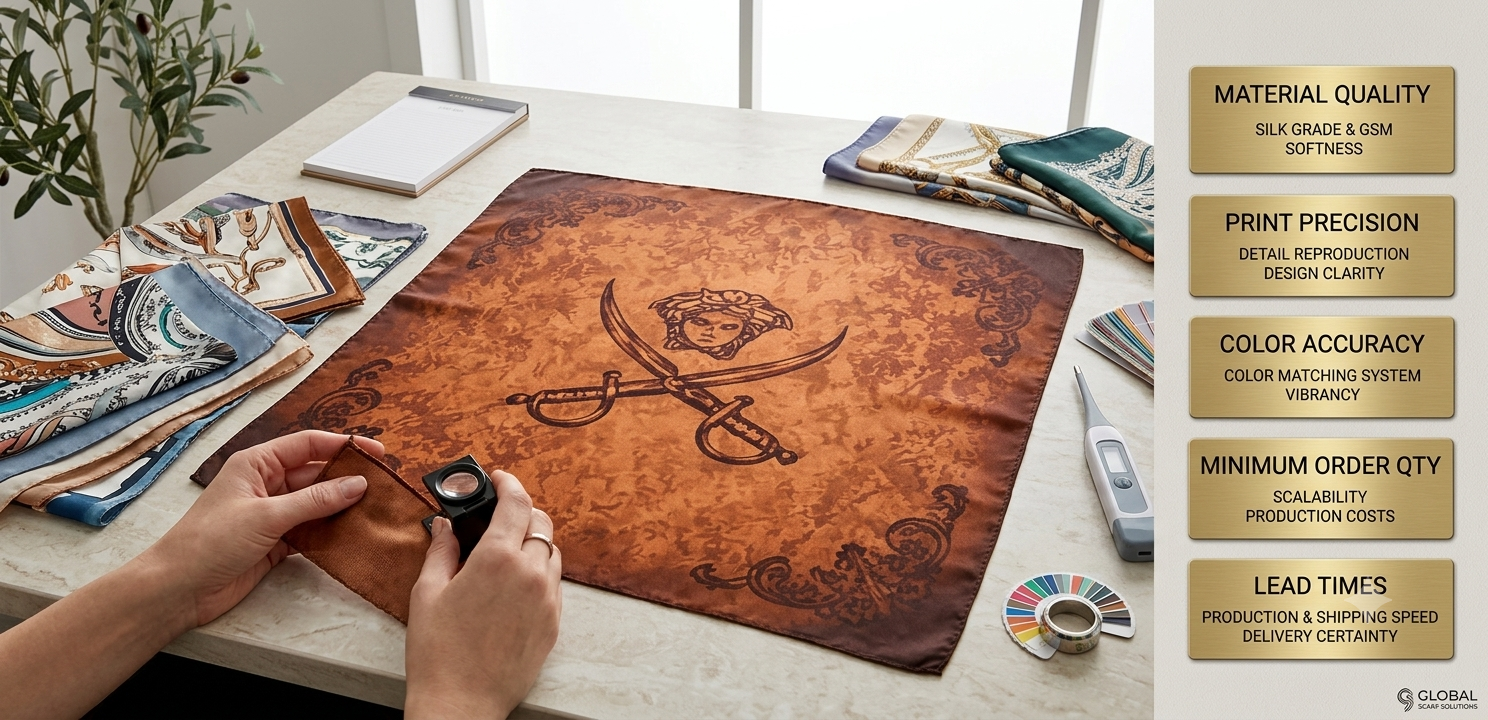
Ultimately, selecting a fully integrated, audited wholesale scarves factoryprovides the technical infrastructure, raw material security, and compliance oversight required for long-term commercial success. By evaluating prospective manufacturing partners across these key operational metrics, enterprise buyers can protect their brand reputation, optimize procurement budgets, and deliver exceptional luxury accessories to their global clientele.
Post time: Jul-24-2026